animalia
Created by Rudy Jara
  • HOME
  • BIRDS
    • Crested Screamer
    • Anatidae-Ducks, Geese, Swans s and Screamers >
      • Rosy bill Pochard
      • Anserifomes
      • Orinoco Goose
      • Crested Screamer
      • White winged Duck
      • Mandarin Duck
      • Ruddy Duck
    • Pelicaniformes-Pelicans, Gannets, Cormarants, Shags and Frigatebirds
    • Coraciiformes >
      • Laughing Kookabura
      • Halcyonidae >
        • Coracidae >
          • Blue-bellied Roller
          • Racket-tailed Roller
        • white-collared Kingfisher
    • RAPTOR >
      • Bald Eagle >
        • ACCIPITRIDAE >
          • Stellar's Sea eagle
          • Red-shouldered Hawk
          • Harpy Eagle
          • African Crowned Eagle
          • Short-tailed Hawk
          • Red-tailed Hawk
        • Palmnut vulture
        • Lappet-faced Vulture
      • CATHARTIDAE-new world vultures >
        • Black vulture
        • Andean condor
        • King vulture
        • Turkey Vulture
    • Psittaciformes >
      • Cacatuida >
        • Palm Cockatoo
        • Moluccan Cockatoo
        • Umbrella Cockatoo
      • Psittacidae >
        • Rainbow lorikeet
        • Blue-streaked Lory
        • Yellow-streaked Lory
        • Pasquets Parrot
        • Hyacinth Macaw
        • Green-winged Macaw
        • Scarlet Macaw
    • Passeriformes >
      • White headed Buffalo Weaver
      • White-crowned Robin Chat
      • Bali Mynah
      • Golden-breasted Starling
    • Spheniscidae- penguins >
      • Little Penguin >
        • African Penguin >
          • Bucerotidae >
            • Eastern Yellow-billed Hornbill
            • Rhinoceros Hornbill
            • Abyssinian Ground Hornbill
            • Wreathed Hornbill
            • Wrinkled Honbill
        • Rampshastidae-toucans, aracaris, toucanets >
          • Keel-billed Toucan
          • Swainson's Toucan
          • Toco Toucan
    • Pelecanidae >
      • Gruidae- Cranes >
        • Bustards >
          • White-bellied Bustard
        • Wattled Crane
        • Black Crowned Crane
        • Whooping Crane
        • Saurus Crane
        • Grey Crowned Crane
        • Red Crowned Crane
        • Sandhill Crane
        • white-naped Crane
        • Demoiselle Crane
        • Blue Crane
        • Kori Bustard
        • Gruiformes >
          • Sunbittern
        • CICONIIFORMES: Storks, Herons, Ibises and Shoebills >
          • Ardeidae >
            • Boat-billed Heron
            • Pinked Backed Pelican
            • Goliath Heron
          • Red-legged Seriema
          • shoebill
      • Yellow-billed Stork
      • Brown Pelican
      • Magellanic penguins
      • American White Pelican >
        • Hamerkop
      • Great White Pelican
      • Threskiornithidae >
        • African Spoonbill
        • CICONIIDAE >
          • Abdim's Stork
          • Jabiru
          • Saddle-bill Stork
          • Storm's Stork
          • Marabou
          • Wood Stork
        • Roseate Spoonbill
        • Scarlet Ibis
  • Ratites
    • Rhea
    • lesser Bird of Paradise
    • Ostrich
    • Emu
    • Southern Cassowary
  • MAMMALS
    • Carnivora-Bears, cats, dogs, raccoons. otters >
      • Felidae-CATS >
        • Bobcat
        • Ocelot
        • Jaguar
        • Leopard
        • Lion
        • Snow Leopard
        • Tiger
        • Mountain Lion
        • cheetah
      • Mustelidae >
        • Oriental Small-clawed Otter
        • giant river otter
        • North American River Otter
    • PRIMATE >
      • Hylobatidae >
        • Northern White-cheeked Gibbon
        • Siamang
      • HOMINIDAE- Apes >
        • Bonobo
        • Western Gorilla
        • Orangutan
        • Chimpanzee
      • Callitricidae >
        • Cotton-top Tamari
        • Red-handed Tamarin
        • Golden Lion Tamarin
        • Golden-headed Lion Tamarin
        • Black Lion Tamarin
        • Emperor Tamarin
        • Pied Tamarin
        • Pygmy Marmoset
        • Bearded saki
      • Atelidae- Spider, Wooly and Howler Monkeys >
        • Red howler monkey
        • southern Black Howler Monkey
        • Central American Spider Monkey
    • Pilosa-anteaters, sloths, >
      • Giant Anteater
      • Brown Throated Three toed sloth
      • Hoffman's Two-toed Sloth
    • Marine Mammals >
      • Manatee
      • Cetacea >
        • Beluga
    • ARTIODACTYLA- >
      • Bovidae >
        • Dama Gazelle
        • Gemsbok
        • Scimitar-horned Oryx
        • Lesser Kudu
        • Greater Kudu
        • Klipspringer
        • Bongo
        • Bontebok
        • Waterbuck
        • addax
        • Nubian Ibex
      • Suidae >
        • Red River Hog
        • Warthog
      • Giraffidae >
        • Giraffe
        • Okapi
    • Elephantidae >
      • African Elephant
      • Asian Elephant
  • REPTILES
    • Crocodylia-Alligators, Crocodiles and Gharials >
      • American Alligator
      • Chinese Alligator
      • Gharial
      • Morelet's Crocodile
      • Orinoco Crocodile
      • Saltwater Crocodile
      • Cuban Crocodile
      • Nile Crocodile
      • Mugger Crocodile
    • SQUAMATA >
      • Serpentes >
        • Green Anaconda
        • Copperhead
      • VARANOIDEA- Varanids and Helodermids >
        • Komodo Dragon
        • Green Tree Monitor
        • Water Monitor
        • Gila Monster
        • Beaded Lizard
  • AMPHIBIANS
    • Anurans-Frogs and Toads
  • Index
  • Reference
  • New Page

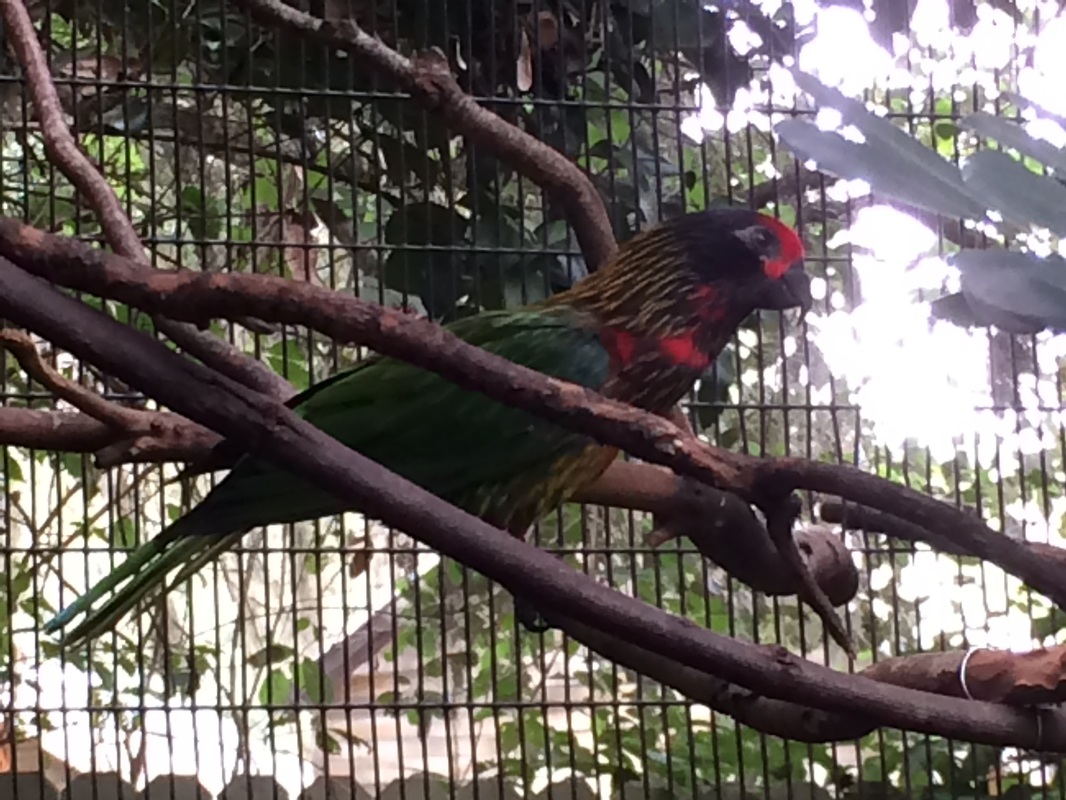
Yellow-streaked Lory- Chalcopsitta scintllata

Range: New Guinea
Size:31 cm ( 12in)
wingspan:42-47 cm
               18-24 in
Weight: ♂ 180-245g (6-8oz) 
            ♀: 180-145 g (6-8 oz) 

Diet: Nectar 
Habitat: Rainforest 
Eggs: 2-3
Nest: Tree cavity 

Incubation : 24 days  
Fledging
Social: Flocks up to 30 

Sexual maturity:4-5 yrs 
Breeding monogamous 
Subspecies: 3
Longevity: Captivity: 19 years

Wild: Unknown 
IUCN:Least Concern 


The Yellow-streaked Lory is native New Guinea and a few surrounding islands. There are three subspecies which appear similar with the amount and width of streaking being the most observable difference.

Like other lories the yellow-streaked lory feeds on nectar. The tongue is adapted for this by having tufts of papillae on its tip to collect nectar and pollen. By feeding on different flowers the lory helps with pollination.

The population of yellow-streaked lory has not been quantified but is common throughout its range. The IUCN list the species as Least Concern and it is listed in Appendix II of CITES.

Although not listed on the USFW Endangered Species list it is protected under the WBCA and it is illegal to import into the United States. 

Your browser does not support viewing this document. Click here to download the document.
Picture
PDF
Powered by Create your own unique website with customizable templates.